
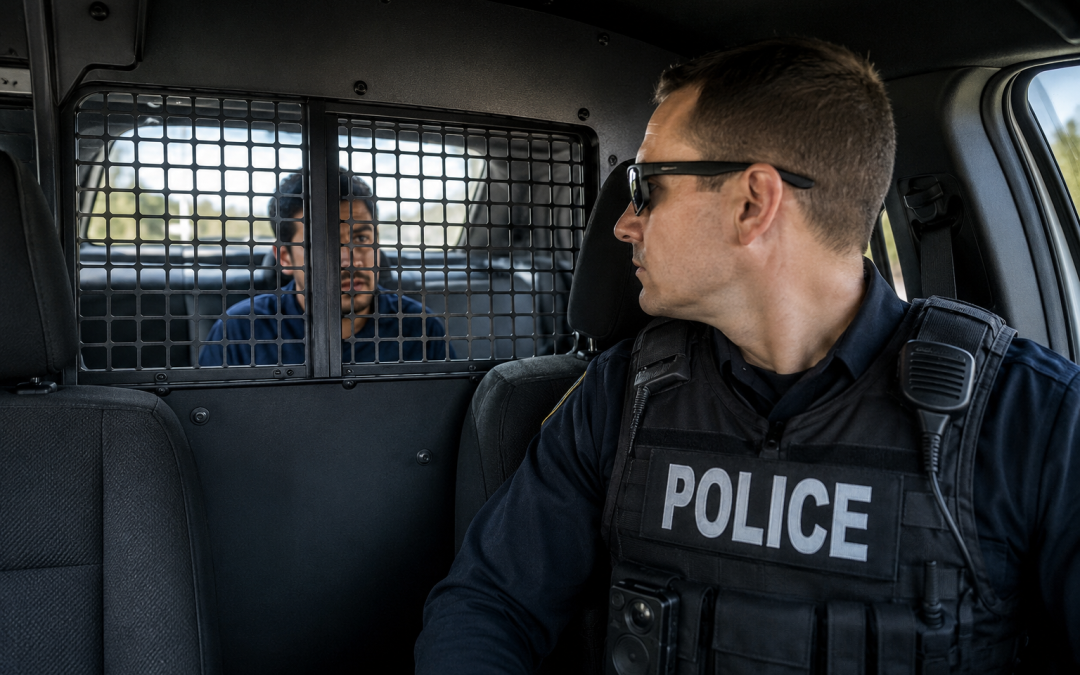
Every traffic stop, arrest, and detainee transport comes with variables that officers cannot predict. Once a detainee is placed in a patrol vehicle, the focus shifts to reaching the destination safely while protecting everyone inside the vehicle. Equipment plays a major role in that process, and one component that often receives less attention than seating or restraint systems is the vehicle’s window protection.
Armored police vehicle windows are designed to help create a safer transport environment. They protect officers from reaching hazards, reduce opportunities for damage inside the vehicle, and help maintain visibility throughout the transport process. When integrated with transport seating, restraint systems, and other interior equipment, they become part of a complete safety strategy that supports officers every day.
For agencies responsible for transporting detainees on a regular basis, understanding how window armor works can help make better decisions when upgrading or outfitting patrol vehicles.
Why Window Protection Matters During Prisoner Transport
Prisoner transport vehicles experience demanding conditions throughout their service life. Officers may transport cooperative individuals during one shift and highly agitated detainees during the next. Vehicle interiors must withstand repeated use while continuing to function safely.
Rear passenger windows are especially vulnerable during transport. Detainees may kick, strike, or lean against windows during transit. Although modern vehicle glass is durable, it was not originally engineered specifically for law enforcement transport environments.
Window armor provides an additional protective barrier that helps officers maintain control of the transport compartment while minimizing unnecessary exposure to potential hazards.
According to the U.S. Department of Justice’s Bureau of Justice Statistics, state and local law enforcement agencies make millions of arrests every year, resulting in a significant number of prisoner transports across the country. Reliable transport equipment helps agencies manage these routine operations more safely and efficiently. Source: https://bjs.ojp.gov
What Are Armored Police Vehicle Windows?
Armored police vehicle windows are protective systems installed over or in place of standard rear passenger window areas inside law enforcement vehicles.
Depending on the agency’s operational needs, these systems commonly use:
- Steel mesh screens
- Solid polycarbonate panels
- Combination systems that integrate both materials
Each option is designed to improve officer safety while maintaining visibility and durability throughout daily use.
Unlike aftermarket accessories intended for civilian vehicles, law enforcement window armor is engineered specifically for the demands of prisoner transport.
Common Materials Used in Window Armor Systems
Different materials provide different advantages depending on the department’s priorities and vehicle assignment.
| Material | Primary Benefit | Common Applications |
|---|---|---|
| Steel mesh | Excellent ventilation and physical protection | Patrol vehicles with frequent prisoner transport |
| Solid polycarbonate | High impact resistance with clear visibility | Agencies prioritizing visibility and containment |
| Combination system | Blends visibility with physical protection | Departments seeking maximum versatility |
Many agencies select the configuration that best matches their fleet requirements, transport frequency, and operational procedures.
How Polycarbonate Protects Officers
Polycarbonate has become one of the most common materials used in law enforcement transport vehicles because of its exceptional impact resistance.
Compared to standard automotive glass, polycarbonate is engineered to absorb repeated impacts while maintaining its structural integrity. This makes it well suited for transport environments where detainees may strike windows or attempt to damage vehicle interiors.
Additional advantages include:
- Clear visibility between front and rear compartments
- Strong resistance to repeated impacts
- Long service life under heavy daily use
- Reduced maintenance compared to damaged interior panels
For officers, maintaining visibility into the rear compartment is an important part of situational awareness throughout transport.
When Steel Mesh Is the Better Choice
Steel mesh continues to be a popular solution for many patrol vehicles.
Its open design allows excellent airflow while creating a durable physical barrier between detainees and vulnerable vehicle components.
Departments often choose steel mesh because it offers:
- Excellent durability
- Simple maintenance
- Good ventilation
- Strong resistance to abuse
- Reliable long-term performance
For agencies operating in warmer climates or transporting detainees throughout long shifts, improved airflow can make the rear compartment more comfortable without sacrificing security.
Window Armor Works Best as Part of a Complete Transport System
No single product creates a safe prisoner transport vehicle on its own.
Modern law enforcement transport vehicles function best when multiple systems work together. Transport seating, restraint systems, door covers, molded floor covers, and window armor all contribute to creating a secure environment for both officers and detainees.
A well-designed transport compartment helps officers:
- Maintain better visibility
- Reduce unnecessary physical interaction
- Protect vehicle interiors
- Improve transport efficiency
- Support department safety policies
This integrated approach has become increasingly common as agencies modernize their patrol fleets.
Proper Fit Makes a Significant Difference
Vehicle equipment performs best when it is designed specifically for the vehicle platform.
Poorly fitted aftermarket products may interfere with window operation, create rattles, reduce visibility, or require additional maintenance over time.
Purpose-built window armor systems are engineered to match the dimensions of specific patrol vehicle models, creating a clean installation that supports long-term reliability.
Proper fit also helps preserve the vehicle’s professional appearance while minimizing unnecessary movement or wear during daily operation.
Durability Matters for Fleet Operations
Fleet managers evaluate equipment differently than individual vehicle owners.
A transport vehicle may complete multiple prisoner transports in a single shift and remain in service for many years. Equipment that requires frequent repairs or replacement increases downtime and maintenance costs.
Durable window armor helps agencies by providing:
- Long service life
- Lower maintenance requirements
- Consistent performance
- Reliable protection throughout the vehicle’s lifecycle
Investing in durable transport equipment often reduces long-term operating costs while keeping vehicles available for patrol assignments.
Choosing the Right Window Armor for Your Agency
Every law enforcement agency has different operational requirements.
Before selecting a window armor system, fleet managers often evaluate several factors:
- Vehicle make and model.
- Frequency of prisoner transport.
- Department policies.
- Climate and ventilation needs.
- Desired visibility between compartments.
- Compatibility with existing transport seating and restraint systems.
- Ease of cleaning and maintenance.
- Long-term durability.
Reviewing these factors helps agencies choose equipment that supports both officer safety and operational efficiency.
Continuous Improvements Have Changed Modern Transport Equipment
Law enforcement transport equipment has evolved significantly over the past several decades.
Manufacturers continue refining materials, mounting methods, and vehicle-specific designs to improve durability, simplify installation, and enhance officer safety.
Companies with extensive experience in prisoner transport systems have also developed complementary products that work together as integrated solutions instead of standalone accessories. This approach improves compatibility across seating systems, restraint systems, window armor, door covers, and floor protection.
As patrol vehicles continue evolving, transport equipment evolves alongside them to meet new operational demands.
Supporting Officer Safety Starts With Well-Designed Equipment
Every prisoner transport places officers in situations that require dependable equipment. Window armor helps create a safer transport environment by protecting vulnerable areas inside the vehicle, maintaining visibility, and supporting the overall security of the rear compartment.
For agencies looking to upgrade transport vehicles, selecting purpose-built equipment designed specifically for law enforcement applications can improve durability, simplify fleet maintenance, and support officers throughout years of service.
At Laguna 3P Manufacturing, officer safety has guided product development for decades. From transport seating and restraint systems to window armor and complete transport solutions, every product is engineered with the practical needs of law enforcement agencies in mind. If your department is evaluating transport equipment for new or existing patrol vehicles, working with a manufacturer that specializes in law enforcement transport systems can help you select solutions that fit your fleet and your operational requirements. Contact us today!